The Season Is Changing. Are You Changing With It?
Published April 21, 2026 | huntNotes
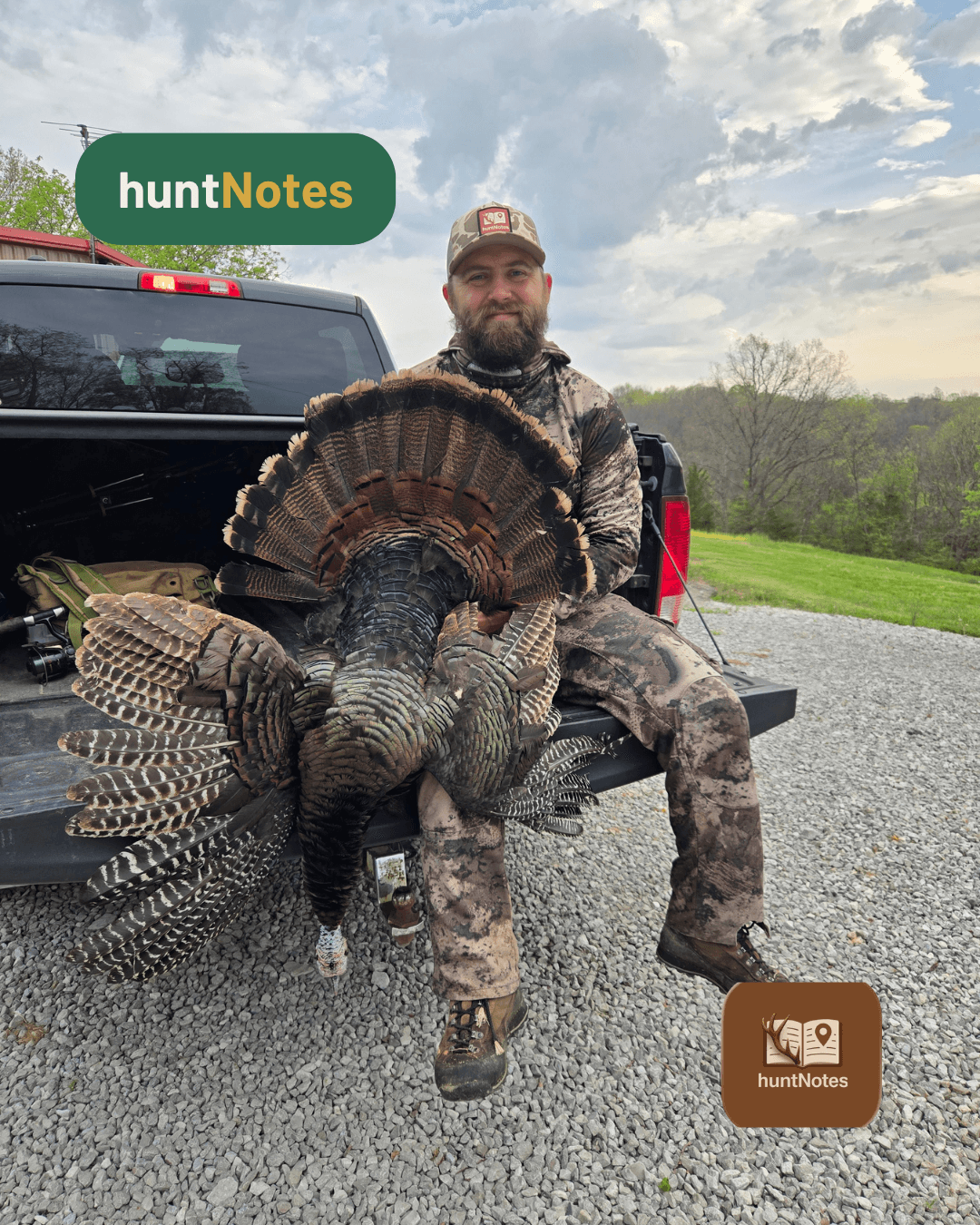
Opening morning I was set up in a pinch point between two big fields, decoy out, waiting on first light. Two birds gobbled about a hundred yards off. Just twice. They flew down, spotted the decoy, and worked toward me without making another sound. Five minutes later it was over. Tagged out before 7:30.
My dad was on the next ridge running his own hunt. He had a bird gobbling and coming in, turned to set up for the shot, then heard putts behind him. A fully strutted tom had slipped in from the wrong direction and was already at his decoy. He spun and shot. Missed. Gone.
Two hunts. Same morning. One could not have gone smoother. The other was a reminder that turkeys do not read the script.
That is opening weekend. But the season runs through May 15th, and the woods are already shifting. What worked Saturday morning is not guaranteed to work this weekend. Research out of Dr. Mike Chamberlain's Wild Turkey Lab at the University of Georgia explains why, and what to do about it.
What Happened to All That Gobbling
Two factors drive gobbling more than anything else, and both are moving against you right now: hunting pressure and hen behavior.
On heavily pressured sites, gobbling declines steadily from the moment the season opens. Dominant toms get harvested. Surviving birds grow cautious. The research shows gobbling increases the farther you get from access points, and that single data point should be shaping how you hunt the rest of this season.
The hen side is happening on its own schedule regardless. By late April, a meaningful percentage of hens are shifting into nesting mode, laying one egg per day over roughly two weeks before going to full-time incubation. Every hen that disappears onto a nest is one less reason for a gobbler to talk.
The Gobble That Does Not Mean What You Think
A gobbler fires on the roost, hammers it a few times, then goes silent after flydown. You called softly, waited him out, and he evaporated. What likely happened is he hit the ground with hens already locked on to him. He found what he was looking for and shut up.
This is why calling the hen instead of the gobbler pays off mid-season. When a boss hen is running the flock, the tom is following her. Match her calls, top them slightly, and fire her up. If she comes toward you to deal with the competition, he comes with her.
The window flips again in late April. As hens disappear onto nests, lonely toms actively searching can be some of the most callable birds of the year. Recognize when the season has shifted into that phase and adjust.
Where the Birds Are Is Not Where They Were
Opening week you are hunting birds that have not been touched. Routines intact, home range undisturbed. Find the roost, set up on the strut zone, call, kill a bird.
Week three does not work that way. Telemetry data shows pressured gobblers pulling back toward core roost areas, staying tighter to ground they know, and moving later in the morning. Birds you were hunting along field edges or ridge corridors have likely shifted into heavier cover closer to the roost.
On public land, walk farther than everyone else. A half-mile in the dark buys you birds that have not heard a box call in two weeks.
Log your waypoints as you go. Where you heard a gobble, where a bird came from, where he exited. Those notes from week one are your scouting intel for week three.
Call Less. Wait Longer.
Every time a gobbler gets called to and does not find what he expected, he gets harder to kill. Less calling, softer sounds, and longer waits are the mid-season adjustment. A few clucks and a slow series of yelps will outperform aggressive cutting in the third week of April almost every time.
The exception is when you have nothing to lose. If a bird is drifting away, getting loud costs you nothing. You were not going to kill him quiet anyway.
On decoys, consider pulling the strutting tom. Early season, a full strut setup triggers dominance aggression. Later in the season, those pecking order battles are settled. A feeding hen with her head down is the lower-risk read on a pressured bird.

Log Every Setup. Learn Every Bird.
Drop waypoints where you heard gobbles, mark where birds came from, and journal your sits. huntNotes keeps the intel that wins week three.
Stay Out Later Than Everyone Else
The 9 to 11 window kills birds every spring. Most hunters have already gone for biscuits by then. Gobblers are visual animals. Once a tom settles into strut mode for the morning, he can go quiet for hours and still be moving. Being in the right spot with patience is how you capitalize on that.
Use huntNotes to log observations, not just kills. A strut zone noted at 10 a.m. in week one is a waypoint worth hunting in week three when the mornings go silent.
The two-year-old class that made opening weekend special is still out there. The birds that survived are wiser, but they are not uncallable. Kentucky runs through May 15th.
Change what is not working. Get farther from the crowd. Call softer. Wait longer.
The season is not over. It is just asking more of you now.

Build Your Season Log. Hunt Smarter Next Weekend.
huntNotes works offline in the timber. Drop a waypoint, add your notes, and carry everything you learn into next weekend. Free to download on iOS and Android.
Free to download. Premium starts at $4.99/month.
Research sourced from Dr. Mike Chamberlain and the Wild Turkey Lab at the University of Georgia's Warnell School of Forestry and Natural Resources.