The Boot Decides Before You Do
Published May 20, 2026 | huntNotes
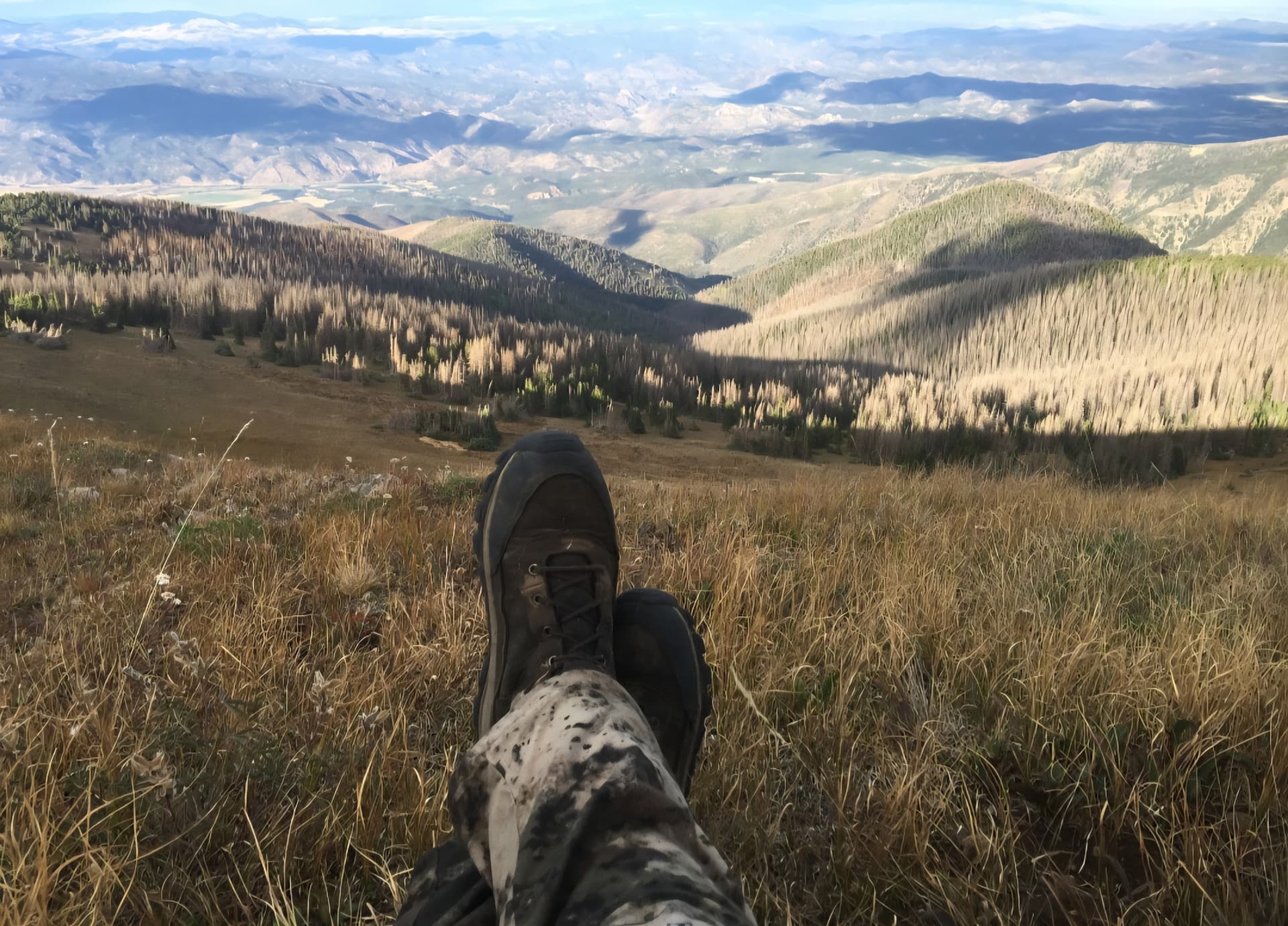
My first trip out west, I went budget on boots. Year one of a western hunt is a financial avalanche and by the time I got to footwear I was reaching for whatever got me close enough to the number I needed. That logic fell apart somewhere around mile eight of day two. If you are planning your first western hunt, do not let boots end up at the back of that list.
That winter I invested in a pair of Crispi Summits. Water-repellent suede and PUtek synthetic upper, full-wrap Gore-Tex lining, Vibram outsole. Italian-made and purpose-built for mountain terrain. Those boots lasted seven years and never spent that time collecting dust between Septembers. Mountain mornings in Colorado, treestand sits in Kentucky, late season creek bottoms at home. A quality boot earns its place across the whole year. I dealt with blisters across a few of those seasons before I learned what was causing them, but the Crispis never failed me. Break-in, lacing, socks, insoles. Every one of those variables mattered more than I expected.
Those boots are now retiring. I have a pair of Lathrop and Sons Mountain Hunters on order and I am genuinely excited about it.
Most Hunters Out East Do Not Need a Mountain Boot
Before we go further, that has to be said. A western backcountry boot is a significant investment and most whitetail and turkey hunters in Kentucky, Ohio, and Indiana do not need one to start. The terrain does not demand it and there is a better tool for the job on most days.
For most eastern hunting, a rubber boot is the workhorse. Creek crossings, river bottoms, CRP fields, early turkey season in wet grass. Rubber boots are completely waterproof from the outside, easy to clean, and naturally better at containing human scent than leather or fabric, which matters on close-range deer hunts. They are not built for covering miles, but flat-terrain eastern hunting does not require that. A solid pair of rubber boots is the right answer for most days most hunters in this region are actually hunting. If you are looking for a starting point, the LaCrosse Alphaburly is a boot that consistently shows up on the right feet in this part of the country and earns it.
Where rubber falls short is the moment the terrain changes or the mileage goes up. Flat walking is their strength. Add elevation, steep sidehill travel, or a loaded pack and they will remind you quickly.
When You Are Ready to Step Up
For hunters who are covering more ground, hunting hilly terrain with any regularity, or starting to think about western hunts, a leather or hybrid lace-up boot is the right move. The upgrade is not about brand names. It is about what the boot is actually built to do, and what it can keep doing across every hunt you take it on. The same boot that carries you through ten miles of Colorado elk country can handle a Kentucky treestand sit or a late season creek bottom walk just fine. That versatility is part of what justifies the investment.
Stiffness matters more than most people think until they have hiked a sidehill with a loaded pack in a soft boot. For steep and rugged terrain, a stiffer boot takes real load off your lower legs by transferring it through the shank. For flat to moderate terrain, more flex gives you quieter movement and comfort through a long day.
Insulation is the other variable to match to your actual hunting. Early season archery and spring turkey are mild enough that zero to 200 grams handles it. Mid-season or late season with consistent movement lands in the 400 to 600 gram range. Static late season sits in January cold push toward 800 grams and above.
One thing worth knowing about heavy insulation: the extra grams can hurt more than they help on a long walk-in. Insulated feet sweat, and sweat creates its own cold problem once you stop moving. On long-sit days in hard cold, I have found better results with a lighter or moderate boot and a boot cover over the top than with maxing out the insulation rating. My current setup is a homemade version cut from an oversized heavy wool sock, though plenty of manufacturers make purpose-built boot covers. It adds a surprising amount of warmth at almost no weight penalty and you can strip it off during the walk-in before you ever start sweating into the boot.
The Blister Problem Is Preventable
This took me longer to figure out than it should have. By the time you feel the hot spot forming, the damage is already in motion. Prevention starts before you leave the trailhead.
Socks. They matter more than most people acknowledge, and this is especially true on late season sits where foot warmth becomes the whole game. I run wool blend in every condition, not cotton, not thin synthetics. Wool regulates moisture, keeps its cushion when wet, and manages temperature in both directions. I pack light on western hunts but I always make room for extra socks. A fresh pair goes on each morning. The previous day's pair dries on the outside of the pack during the hike. The rotation sounds small but the difference by midweek is significant.
Insoles. They are not optional. The footbeds that come stock in most boots are placeholder insoles built to a generic foot. I run Superfeet in every boot I own. The arch support and heel cup change the mechanics of how your foot loads through the day, and the difference at mile eight is real.
Lacing. It matters too. Heel slip is one of the primary blister causes and it is almost always a lacing issue. Lock the heel zone first, then tension the upper ankle zone separately.

Track What Your Feet Are Telling You.
Log conditions, miles, and how each setup held up. The pattern across seasons tells you what to pack better than memory ever will.
On Lathrop and Sons
When the Crispis finally had enough miles on them, I started researching what came next. I landed on Lathrop and Sons out of Illinois and my experience with them has been nothing but excellent.
Their full custom boot system uses 3D foot mapping to match the boot and insole to your actual foot. I elected not to go that route on this first purchase, but even through their standard process the people there are genuinely great to deal with. Stephen and James are the kind of people who actually want to get you into the right boot, not just close a sale. The Mountain Hunters are hand-assembled, built on a full leather waterproof platform with a Vibram Mulaz EVO outsole, and the synergy footbeds that come with them are already a step above what most boots ship with.
The boots arrive late May and they will get extensive miles before September. Every walk between now and the season is part of the investment. I am looking forward to getting them underfoot.
If you have ever dealt with persistent blisters or fit problems that a quality boot alone did not solve, their custom system is worth a serious look. The 3D mapping process is the most intentional approach to boot fit I have seen in the hunting space.
Break-In Is Part of the Purchase
A boot you buy in August that you wear for the first time on opening day is not broken in. It is a problem waiting for the right mile to reveal itself.
Quality leather and suede boots need real miles before they form to your foot. Start with short walks, progress to trail miles, then longer days with a pack. Stiff backcountry boots can take 30 to 50 miles to fully break in. That is the material doing what it is supposed to do, not a flaw.
Take Care of the Boot
Clean them at the end of every season. Treat them before storage. Pull the insoles after wet hunts and let everything dry completely before the boots go back in a bag or locker. Wet boots sealed in a dark space rot faster than you would expect.
Do not condition new boots immediately. Let them go through the first several wears before applying treatment. Follow the boot company's specific guidance from there. A company that publishes detailed care instructions built the boot to last and expects you to hold up your end.
A boot you can resole is a boot you can own for a decade.
What You Log Tells You More Than You Think
The details that separate one hunt from another are the same details that build into useful data over time. Terrain, conditions, miles covered, how your body felt at the end of the day. That information compounding across seasons tells you things your memory alone will not hold.
Over time you start to see that your October sits are comfortable but your late November creek bottoms are the ones that beat you up. You stop guessing at what boot or sock combination to pack. You have your own data telling you.
That is the whole point.

Log Every Hunt. Learn What Works.
Track conditions, terrain, and gear across every season so you stop guessing and start packing what the data says. Free to download on iOS and Android.
Free to download. Premium starts at $4.99/month.