The River Told You Everything. You Just Didn't Write It Down.
Published May 27, 2026 | huntNotes
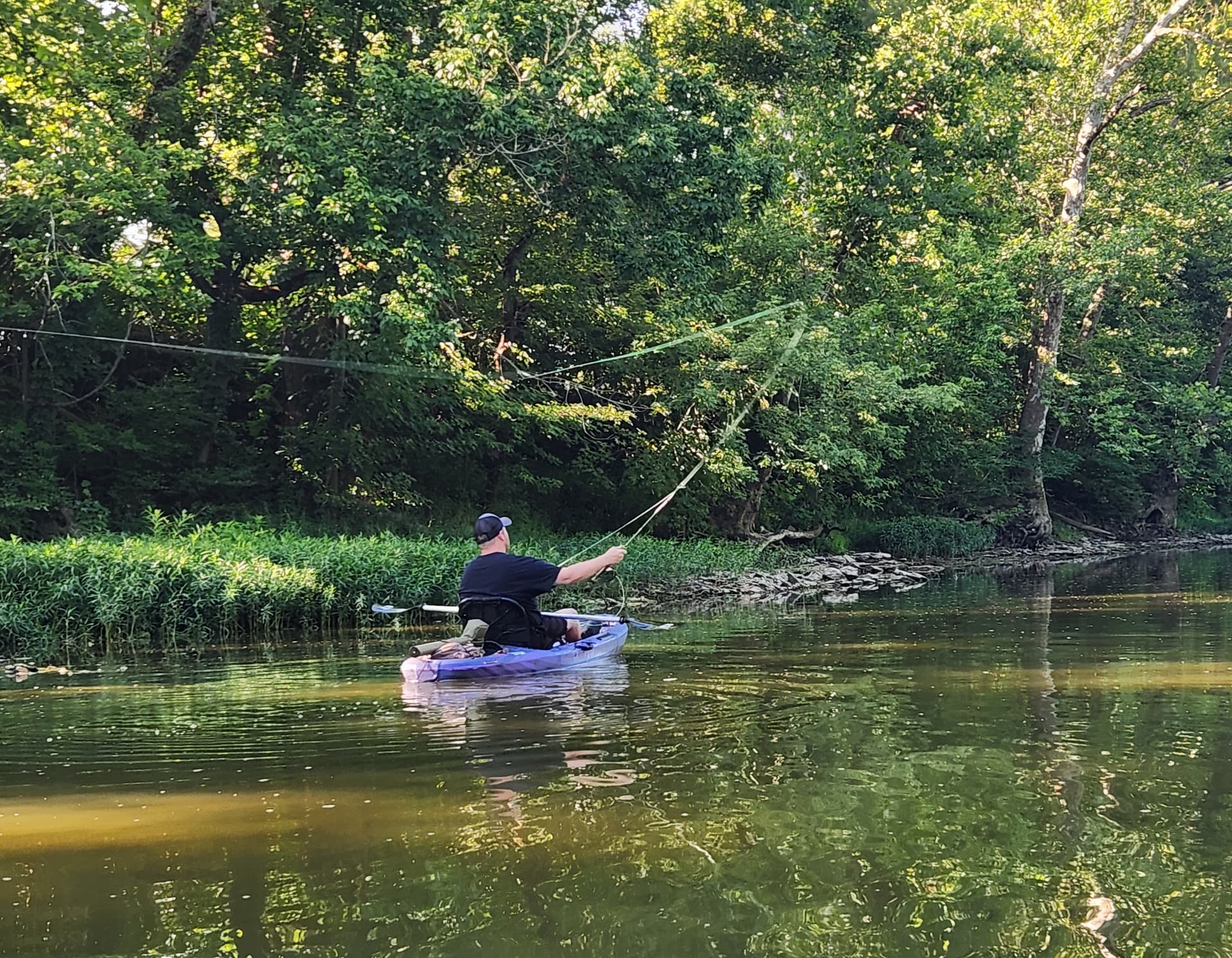
Pressure had been dropping for six hours. You knew that because your phone told you. What you didn't know was what it meant for the water you were about to fish, because you'd never been out there when conditions looked exactly like this. Or maybe you had. You just don't remember.
That's where most fishing trips go wrong. Not on the water. Before you ever leave the truck.
What the Water Is Actually Saying
River gauges measure stage, which is the height of the water above a fixed reference point measured in feet. A gauge reading of 4.2 feet doesn't mean the water is 4.2 feet deep. It means the surface is sitting 4.2 feet above the sensor. What matters to you is whether that number is rising, falling, or holding, and how fast.
Rising water pushes baitfish and crawdads out of their usual spots. Fish have to move to eat, which puts them in predictable staging areas near bank structure, current breaks, and tributary mouths. The bite can be aggressive right at the leading edge of a rise. Let the water get too high and muddy, though, and the whole system goes quiet.
Falling water pulls bait back toward the channel. Fish stack in the deeper holes as the shallows thin out. It sounds like bad news but a moderate fall with clearing visibility can be some of the most productive water you'll find, because the fish are concentrated and they know where to be.
Stable water is the most underrated condition there is. The fish don't have to think about where to go. That means they're sitting where they always sit and feeding when they normally feed. It sounds boring. It isn't.
The USGS runs a national network of river gauges that updates every 15 minutes. Fishermen have been using this data for years. The problem is that a raw number, by itself, doesn't tell you anything useful without context. You need to know what normal looks like on that particular stretch of water.
Pressure Is the Other Half
Barometric pressure is the weight of the atmosphere pushing down on the earth's surface. Fish feel it through their swim bladder, a gas filled organ they use to maintain depth without burning energy. When pressure changes fast, their bladder has to adjust. That takes effort. Effort means discomfort. Discomfort means they aren't thinking about food.
A rising barometer is one of the best times to be on the water. Fish are settled and feeding actively. Moving baits, reaction presentations, covering water. This is when you fish fast and let the fish find you.
A falling barometer signals a front on the way. The bite can actually turn on hard right before the pressure drops out, especially in the hour or two ahead of a major change. After the front passes and pressure bottoms out, the bite slows. How long it stays slow depends on the species and how dramatic the change was.
Stable high pressure can be tough or excellent depending on what was happening before. If pressure settled high after a fast rise, the fish are usually in a good mood. If it settled high after a cold front blew through, plan on finesse presentations and slowing everything down.
The thing about pressure is that most anglers know the broad strokes but don't know what it does on their specific water. A flathead catfish holding on a deep river bend doesn't respond to a barometric drop the same way a smallmouth working a gravel riffle does. The science is general. The application is always specific.
The Part No Algorithm Has
Any app can show you current pressure and stage readings. A few will overlay moon phase and solunar tables. Some will generate a bite score based on conditions right now.
What none of them have is your history on your water. They don't know that your stretch of river runs best when the gauge is in a specific window and falling. They don't know that the creek arm at the back of your lake doesn't fish until the water comes up two feet after a rain, because that's when the crawdads come out of the mud. They don't know that a full moon the night before a slow morning pressure drop is your single best predictor of a good smallmouth bite on your home water.
That knowledge only exists if you built it. You build it by logging trips and letting your own notes tell you what the conditions were every time a pattern showed up. Over enough entries, your journal stops being a record of what happened and starts being a forecast of what's likely to happen. That's the analysis. That's the part no outside algorithm can touch.

Let the Conditions Log Themselves.
huntNotes attaches gauge height, pressure, moon phase, and temperature to every entry automatically. You just add what happened.
The Journal Is the Intelligence Layer
Every trip is a data point. Not just about what you caught, but about everything around the catch. Gauge height. Pressure trend. Time of day. Water clarity. Moon phase. Temperature. What you were using. Where you were standing or anchored.
Individually, those details feel like busywork. Stack six months of them on a single stretch of water and patterns start to emerge that no algorithm could surface, because no algorithm has been paying attention to that specific hollow for that specific reason.
This is what hunting and fishing journals have always been for. The old timers who kept paper logs weren't being sentimental. They were building a private database that compounded every year they used it.
The difference now is that you don't have to record gauge readings by hand or scratch moon phase out of a wall calendar. That data can come with the entry automatically. What you bring is the part that matters: what happened, where you were, and what conditions produced it.
Over time you stop guessing. You start checking your own record.
What to Actually Log
You don't need to write a novel after every trip. A few lines and a handful of data points go a long way. huntNotes pulls the conditions data automatically when you start a fishing entry, so gauge height, barometric pressure, moon phase, and temperature are already attached before you type a word. What you add is the part only you know.
Where you fished and your access point. What species you were after and what you caught. Whether you were covering water or sitting tight. What presentation produced and what got ignored. One or two observations about what the water looked like when you got there.
Three seasons of that on water you fish regularly and you'll start to see it inside your own data. The gauge window where your spot wakes up. The pressure conditions that push fish onto your bank. The moon phase that tips the evening bite two hours one way or the other. huntNotes keeps that history on your device, private, and searchable. No cloud required.
It won't answer every question. Fishing doesn't work that way. But you'll stop showing up blind.
The Gauge Is Already Running
Right now, the USGS network is logging stage on thousands of river miles across the country. The NWS has a forecast for the next 24 hours sitting on a server somewhere. The moon knows what phase it's in.
None of that is useful unless someone connects it to what actually happened on the water. That part is still on you.
Start the log. Not because the data says to. Because two years from now you're going to pull up a morning that looks exactly like this one, and instead of guessing you're going to know. That's the whole game. Write it down.
Start the Log. Stop Showing Up Blind.
Track gauge height, pressure, moon phase, and what actually produced across every trip, so two years from now you know instead of guess. Free to download on iOS and Android.
Free to download. Premium starts at $4.99/month.